
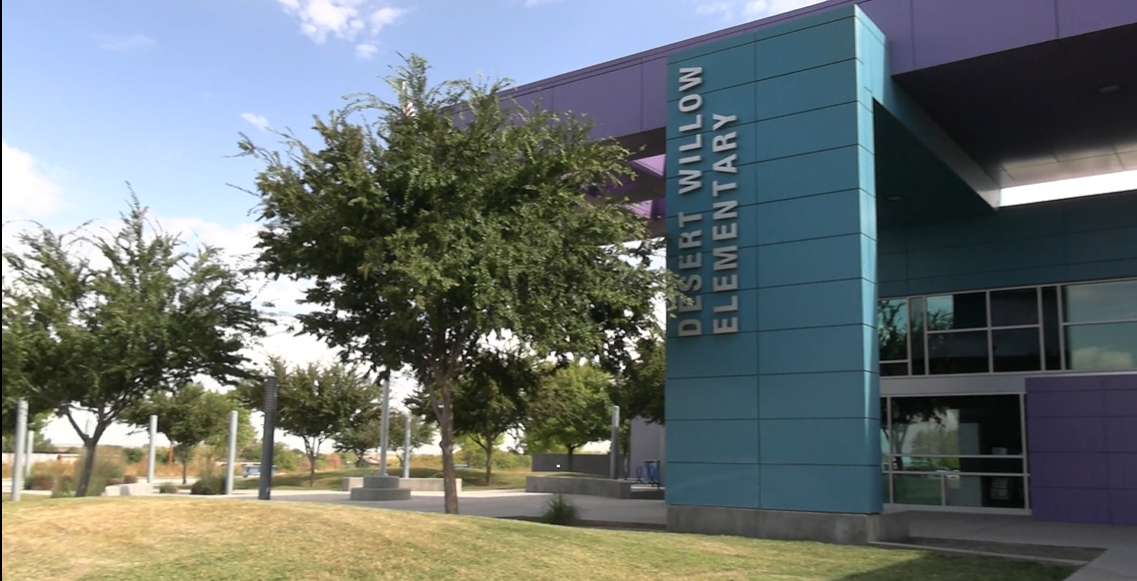
Carlsbad Municipal Schools
Location: Carlsbad, New Mexico
Enrollment (2026): 7,100 students
Schools: 1 preschool, 7 elementary, 2 middle, 1 high school + Early College High School
by Sharon Kebschull Barrett | February 1, 2026
It all began with a fateful ride in a Chevy Suburban.
In 2022, Carlsbad, New Mexico, educators went on a Texas fact-finding mission to the Midland and Ector County school districts, checking out how they had restructured their staffing.
The trip was sparked by Carlsbad Deputy Superintendent LaVern Shan, a former Ector County principal who had begun to hear from colleagues there about Opportunity Culture® staffing models—and how they never wanted to be a principal anywhere that didn’t use them.
When she went back to see what all the fuss was about, Shan said she thought, “This is crazy. There is no way this would work. But I watched the data. I watched their vacancies. I’ve watched how things changed.”
Shan shared what she saw with Superintendent Gerry Washburn, and they took the 2022 trip with educators, school board members, and union officials.
“It gives me chills thinking about it,” Cottonwood Elementary School Principal Donna Johns said. “Right from the beginning, I was like, this is what we need. This is exactly what we need. We had the opportunity to tour all these schools and see this amazing coaching and teaching and the collaboration. And then when we were in the Suburban driving home, I told a couple of the central office people, we’re doing this. Like, this is what we’re going to start tomorrow. And I was told, hang on, Donna Johns, you have to hang on; we have to have a plan. But it was so exciting, because I saw what was possible for our school and what was possible for our students.”
PR Leyva Intermediate School Principal Lynde Longbine—who grew up in the district—had the same experience, riding alongside Johns and Shan in the Suburban. “I was like, I’m doing it. As soon as I get back tomorrow, LaVern, I’m doing this. And she’s like, whoa, slow down.”
For Longbine, seeing what Opportunity Culture® teaching teams provided for teachers was immediately convincing, given her previous experience as an instructional coach at an elementary school with more than 600 students.
“I just felt like I was not supporting my teachers enough. And so, seeing the amount of support teachers were getting, I was like, that’s what I dreamed of. I just didn’t know it was a thing that could be done in a district.”
Lisa Nesbit, now the principal at Desert Willow Elementary, had also been an instructional coach—the only one for more than 35 teachers. “I was able only to coach a few people at a time or here and there. But now with Opportunity Culture teams, it has shifted our entire culture to being a coaching culture…. you’re not being coached because you’re doing something wrong. You’re being coached so we can help everybody become the teacher or the person, the educator, that they want to become.”
Before these three principals began using Multi-Classroom Leader® (MCL™) teams, in which educators with a record of student learning success lead a small group of educators, teachers’ morale was suffering—which meant students were, too.
“They didn’t believe in our kids,” said Nesbit, who was assistant principal at the time. “And when we don’t have the right staff that are going to believe in our kids, then that’s where our kids are going to be. They’re going to achieve at that expectation. And so we worked very hard as an admin team with the principal who was there then to really shift the teachers to wanting to be here and setting the bars for our teachers to be high, so that the teachers could then set the bar for the students to be high. … Adding the MCL role on top of that—to even give more support in what that rigor should look like and those expectation levels should look like—made a huge shift in belief in our kids.”
Cottonwood Elementary faced the challenge of being a brand-new school forced to open remotely in the midst of Covid. Johns was assistant principal then, as students and teachers from three small schools were merged at Cottonwood. Creating a new staff culture and relationships with families, when everyone was remote or working on A/B days as schools began to reopen, proved difficult. That made Johns especially excited about the collaborative nature of MCL™ teams.
By 2024–25, Cottonwood had gone from covering three grades with MCL™ teams to reaching all grades with the teams. Similarly, Desert Willow was reaching all grades except kindergarten, and PR Leyva had MCL™ teams covering all grades for math, ELA, and science.
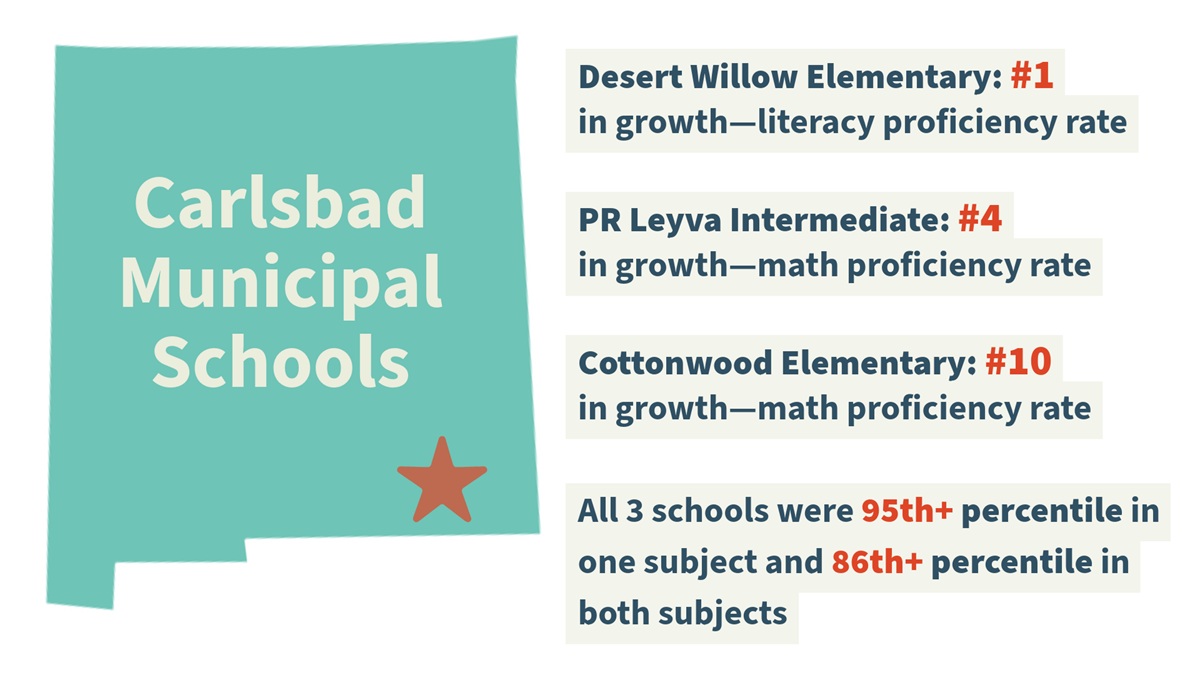
With all those teams in place, their schools got state-leading results in reading and math.
Desert Willow posted the highest growth in the state in the literacy proficiency rate among medium-size schools and the 31st-highest in math.
PR Leyva got the fourth-highest growth in the math proficiency rate among large schools and the 17th-highest in literacy.
And Cottonwood saw the 10th-highest growth in the math proficiency rate and 18th-highest in literacy among medium-size schools.
What Changed in Carlsbad
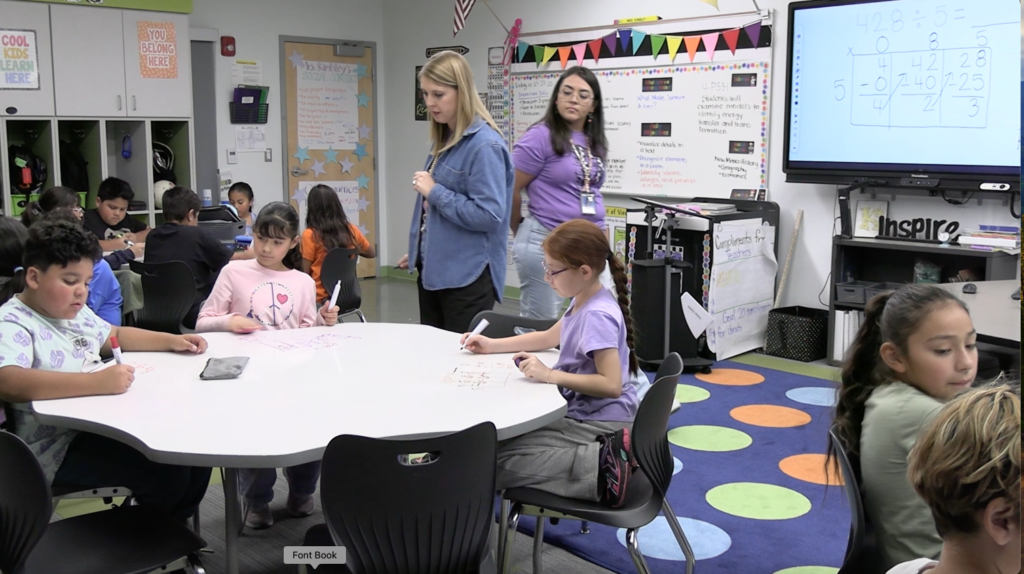
After implementing MCL™ teams, the principals saw improvements in instructional planning and the use of student learning data, along with increased small-group teaching and tutoring time.
Educators in the MCL™ role lead the team in planning and preparing to teach their specific curricula and lessons, in adopting new curricula and teaching methods, and in student data analysis and subsequent adjustments in instruction. They provide weekly—often daily—on-the-job coaching, and are formally accountable for the results of all of their team’s students.
Nationally, they earn supplements averaging 20 percent (and up to 50 percent) of teacher pay, and their teams may include the Team Reach Teacher™, Master Team Reach Teacher™, and Reach Associate™ roles, which also earn supplements.
At PR Leyva, small groups based on data were a main MCL™ focus in 2024–25, Longbine said. Her teams have also taken a cross-content approach, partnering reading with history and science with math, and bringing in electives as well, amplifying the small-group effects.
“It’s a big shift,” Longbine said. “I have done all of my career in elementary and early childhood, and so coming over to the middle school, I’m like, wait a second, these kids would benefit from small groups. … It’s just good teaching. It’s good practice. And so that was a shift for middle school to do small groups and how that rotates. How do you keep them all doing something?”
Students generally work in small groups for about 20 minutes per period, and a restructured master schedule created an additional elective period that included math and ELA intervention classes.
Having MCL™ and Master Team Reach Teacher™ educators lead intervention classes has helped students get excited about them, Longbine said.
“They know that an intervention class is not a bad thing,” she said. “The students feel responsible in a way that, you know, what I’m doing in here is helping me in my core classes—but also, the teachers are so excited to be in there. They have fun competitions, and it really is a little community.”
For Nesbit, focusing on the advanced paraprofessional Reach Associate™ role for tutoring time has made a difference, using each paraprofessional’s skills in ELA or math to students’ advantage.
Desert Willow did not use small-group time when she began there, Nesbit said.
“The majority of our teachers now absolutely love it, and they realize the impact and the difference it makes being able to reach that smaller group of kids at a time and giving them what they need, when they need it,” she said.
Providing Strong District-Level Support
The principals of Cottonwood, Desert Willow, and PR Leyva stress the need for strong district-level support, which they initially got from Superintendent Washburn, Deputy Superintendent Shan, and Assistant Superintendent Allison Hervol. The three district leaders made a powerful case for Opportunity Culture® implementation to their educators, then worked with each school to design the staffing model to fit their needs, with support from Public Impact® consultants.
The need for one person to oversee the work led the district to hire an Opportunity Culture® director, Mindy Rogers, who has been able to provide intensive support, the principals said.
Having been in that role in Ector County, Rogers brought a wealth of experience to Carlsbad, which she saw faced similar issues, including persistent low performance in growth and proficiency; struggling subgroups including special education and English language learners; a transient population affected by shifts in the oil industry; and high teacher vacancy rates.
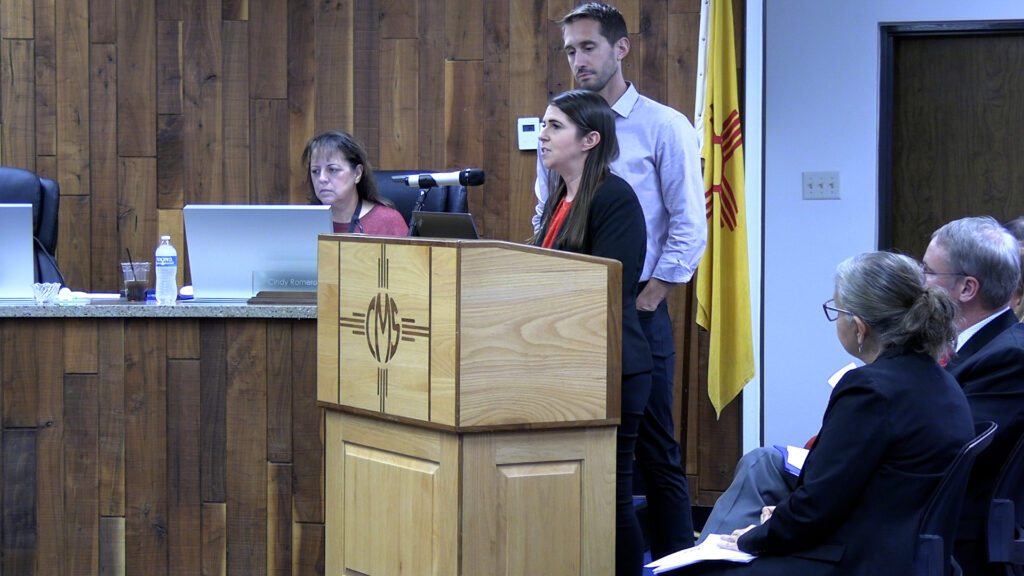
Working with Hervol, who leads the curriculum and instruction department, Rogers has been able to push high-quality Opportunity Culture® implementation.
She guides schools in the design and early-implementation phase, helping them create financially sustainable team structures (for example, choosing the partial-release MCL™ role over a full-release one) and schedules that create as much small-group tutoring time as possible in all grades, and leading, with Hervol, a rigorous selection process for the advanced team roles.
Building capacity beyond a few district leaders matters for long-term success, they believe, so Rogers provides extensive coaching and professional learning for all the advanced team roles, and for the principals.
As schools begin to see success, and as Opportunity Culture® designs expand throughout the district’s schools, system leaders can also keep the spotlight on the big goals, Hervol said.
“I want every kid to be able to leave here and know I have a future and I can go on to do great things, and that we’ve prepared them to do that. So we’re not saying, ‘well, 30% of them are ready, but we’re sorry about the other 70%’—so really just seeing that growth continue across the board,” she said. “And that kids are really ready—like, they’re ready to go to college. They don’t have to be in remedial classes at the beginning. They know what it means to work hard and struggle with the text or, you know, with ideas to think big. I just think we’re doing a disservice if we don’t let them leave here with that.
“So that’s what I’m excited to see, that at some of our highest-poverty, lowest-performing schools, those students are really shining and accelerating and growing and the staff is like excited about it. And then that’s what I’d like to see for the rest of our district, for our whole district, so that kids are successful.”
With Support, Teachers Want to Stay
Team and school leaders must build relationships to get buy-in, Longbine said; she thinks MCL™ modeling and co-teaching helped team teachers grasp their collaborative partnership.
Some Desert Willow teachers originally resisted the team structure, Nesbit said, fearing “it’s just extra or somebody watching them all the time or another person telling them what they should be doing.”
In fact, one teacher who felt that way in the first year has now taken a Master Team Reach Teacher™ position, providing some team leadership and reaching more students. “So she’s one of our big success stories,” Nesbit said. “It just shows the impact that this program has. I think what switched it around for her was she saw the impact it had on her students, and it showed the impact it made on her teaching—she realized they’re not just here to tell me I’m doing things wrong.”
And teachers have stayed because they feel supported, even when the bar has been raised for them.
Once Cottonwood was selected to implement Opportunity Culture® designs, Johns said, teachers had the option to move to another school.
“We did have a few that wanted to go to a different school, and the rest remained. Our retention rate has been unbelievable,” she said, noting that she’s had people leave only because they’ve moved away, while others have chosen not to move, citing their teaching teams. “It speaks volumes for what we’re doing.”
Before becoming principal at PR Leyva in 2024–25, Longbine led Desert Willow for three years, when the school began using MCL™ teams.
“My first year I hired about 17 out of 35 teachers. The next year was 12, and the next year was five,” she said. “You could see the progression of retaining teachers based off the support they were receiving. And a lot of our first through three years [teachers], we were keeping them instead of losing them because of the insane things teachers have to do.”
Seeing those effects, Longbine is committed to expanding the teams beyond core content areas.
The district is also focused on growing its own teacher pipeline.
At Desert Willow, Nesbit said she hoped to keep several RA™ paraprofessionals as teachers after they finished getting education degrees. At PR Leyva, three teacher interns were serving in the RA™ role as they worked toward certification, and the master reach role is seen as a steppingstone to fully leading a team.
“All these layers are coming together,” Longbine said.
The district continues to consider how it can use variations of Opportunity Culture® roles to improve outcomes, such as a special education-specific MCL™ role at Cottonwood.
“Our special education teachers didn’t feel like before they got the coaching that they necessarily needed. And so now they do feel like they have the coaching and the support,” through the SPED MCL™ role, Johns said. “It’s also one more area where we didn’t realize that small-group instruction would be so vital, so important. I mean, we really thought, ‘They’re already getting pulled. Do they need to be pulled more?’ But of course they do. All students need that direct instruction.”
Having a SPED team leader has also helped to streamline the IEP (individual education plan) process and create consistent expectations across the SPED resource, low-incidence, and inclusion classrooms.
And the district asked Johns to pilot the Multi-School Leader™ role this year. Cottonwood has become such a well-oiled machine that she, a self-described micromanager, feels comfortable leaving for several hours each week to coach two other principals, Johns said.
Strong Teams, Strong Results
While staying focused on the continued growth their students need, all three principals celebrated their schools’ state-leading growth and associated positive effects.
“We’re very, very intentional about the planning process because we know that’s how we get results—and high expectations for students, making sure that our students know you are the best, you deserve the best, and we’re going to deliver the best,” Johns said.
“Teachers feel more confident with the way that they’re delivering lessons. They feel more comfortable with their interpretation of the standards, the rigor of the standards. And they also feel more comfortable knowing that they are the expert, and they do know what’s best. And we’ve seen teachers just being able to step out on a ledge—that they’re not stuck in a box and they can be more creative,” she said. “Our culture is they trust one another. So everyone knows if I fall, there’s somebody who will pick me up.”
She sees multiple changes in the school’s atmosphere.
“Before, I’m not sure that we were a school that wanted feedback. Now we crave feedback,” she said. “If someone comes to me, I want feedback on how did I do? If I met with a parent, how do you think that delivery went? Could I have improved? It’s everywhere. Everyone wants feedback.”
That translates to student shifts beyond test results, such as attendance rates.
“We’re proud to be Cottonwood Coyotes. We’re proud of our students. We’re proud of each other,” she said. “We do see a gradual increase in the attendance rate. When kids are here, kids are happy. We’ve been really, really focused on our relationships with our families. and making sure that families feel valued and feel heard.”
At PR Leyva, it isn’t just students’ attendance that has been affected, but teachers’ as well.
“My staff attendance, too, has improved greatly this year,” Longbine said. “You know, when your people are happy, and they feel good about where they’re at and what they’re doing, they’re going to show up to do it every day.”
In the previous year, Longbine said she watched teachers suffer from burnout because they had to spend their planning periods covering absent teachers’ classes, which also threw off MCL™ coaching and planning schedules.
“It just creates this snowball effect. And so this year, with teachers showing up every day, we’re not getting off schedule. We’re not having to play make-up. And they’re getting their prep times. This year has really been fantastic to where it’s very rare that I’m having to have teachers cover other teachers.”
Now, she said, “I think there’s a joy factor. When you walk into the campus, you can feel it…you have visitors come in and they’re like, man, it just feels good to be here. And that’s what I strive for. I want students to feel good when they’re here. I want my staff to feel good and have that joy coming to work and they want to be here every day—so, really working on finding the pockets of things that are not bringing joy and adjusting those, fixing those and supporting them.”
Additionally, Longbine saw her students start the year with the same score on MAP testing as they ended the previous year.
“So we didn’t see any of that summer slide or any of those gaps,” she said. “I’ve never had that before. Maybe I shouldn’t admit that. But being able to start where we ended and not have to go back was huge. And so I know that will pay off as we move forward through the year.”
What did she think made the difference?
“I think for a lot of it, it’s our students are actually, really learning. It’s not memorizing. They’re just not going through the motion and checking off boxes. And our teachers aren’t doing that either. Students are really learning and internalizing what it is being taught.”
Becoming first in the state for ELA growth among similar-sized schools, Nesbit said, required the support that MCL™ teams and small-group instruction create for teachers, leading to the adjustment in students’ belief in themselves.
“We’re able to put that ownership of the data onto the students, say, ‘Here’s where you are. Let’s set some goals for where you want to be’,” she said. “They would come out of interim testing last year and couldn’t wait to come into the cafeteria and say, ‘Guess what I did? My goal was this, and I made it even higher than that.’ And they were so proud of themselves. So just seeing that internal motivation for our kids has made a huge difference.
No Turning Back
From the principals’ perspective, their jobs became significantly more balanced once they had MCL™ teams in place—and all three now can’t imagine life otherwise.
The coaching teachers now get, Johns said, became “more microscopic,” allowing her to think more broadly and deeply about what the school needs for success, then have the team leaders guide teachers down the path.
“It’s totally different. I mean, I say this all the time: I would not work at a school that wasn’t an OC school,” Johns said. “Before OC, I could definitely see how principals would grow just very stagnant and tired and want a job change. With OC, we’re all doing incredibly important work, but we’re not having to do it alone.”
For Longbine, “it’s been amazing. I don’t know if I would teach in another school that’s not OC. I have been able to now really think strategically about what we’re doing, where before I didn’t really have that time, because now I have trust in the instructional leadership that’s going on in this building, and it doesn’t have to be me. I’m a part of that, and I support that, but being able to really think through, like, what are we going to do? How are we going to align this campus so that it’s just seamless and we’re all on the same page? That’s been fantastic.”
Likewise, Nesbit shares this sentiment repeatedly. “I would never want to work on a campus that is not an Opportunity Culture campus,” she said. “Do it today. Do it yesterday, because it is truly an amazing way to structure your campus.”
No Going Back: Principals Need Opportunity Culture® Teams
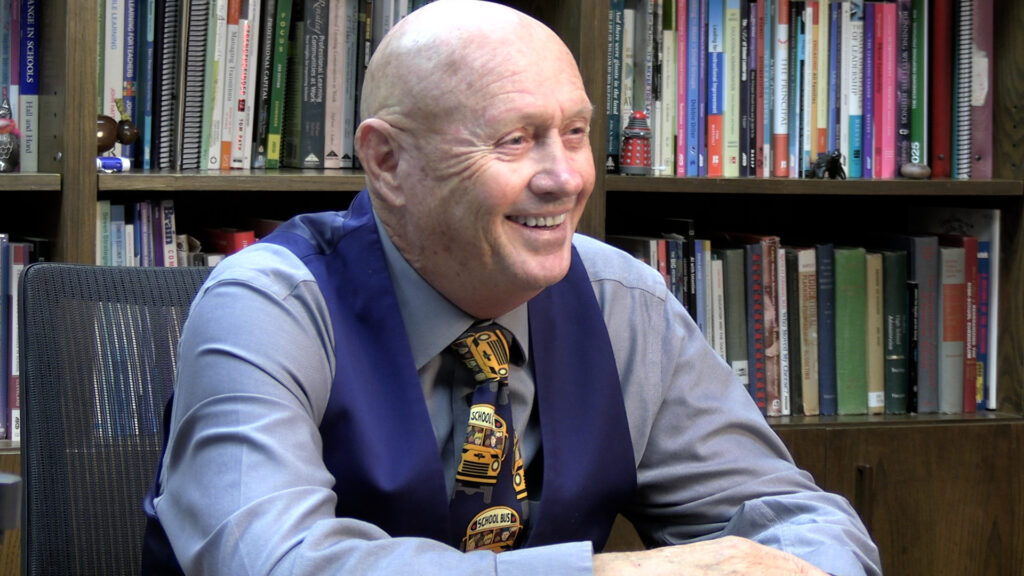
Principals from Carlsbad, New Mexico reflect on how Opportunity Culture® teaching teams have made their jobs more manageable and why they would never again want to work at a school that doesn’t use this staffing model.
Read more district spotlights: Ector County ISD, Texas