By Emily Ayscue Hassel and Bryan C. Hassel, co-presidents, Public Impact®
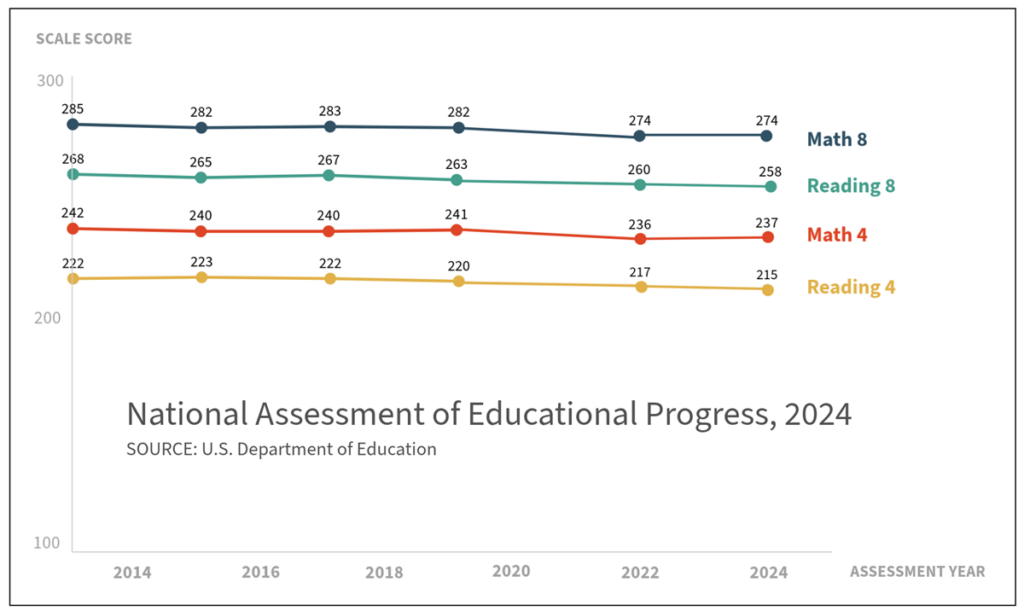
The latest NAEP scores are no surprise, despite educators’ hard work to support students, but this is not just an educational crisis; it’s an economic one. Education outcomes determine students’ job prospects, which affect local and state economies—and tax revenues. Learning boosts add to public funding, while shortfalls drain public funding. Whatever you care about, K–12 learning results could pay for it, and support students and their communities.
What is the sure fix? Choose changes with the maximum average outcomes. Maximum average analysis considers the results of a change for all students in your purview, including those left out when a change is not scalable or sustainable. The best options optimize results times reach—without running out of money, time, talent, or other scarce resources. And they do so this year, next year, and beyond—so students benefit over and over, not just for a short time, only to slide back later.
When the right outcomes are the goal, maximum average outcomes boost the economy—and fund the cost of changes via tax revenues.
We used this thinking to design Opportunity Culture® staffing models. It also drove our work to bring down the cost of making the transition to this strategic staffing, to use 10 years of data and research to create a certification program that supports ongoing positive outcomes, and to create an online portal to house all our advising and data analytics, so the “what works” warehouse can grow, for enduring maximum average outcomes.
The formula for making policy and management decisions can get complex, and the detail is different in different sectors. Yet it’s simple enough that every school and educator can use it: Reach X Results = Maximum Average Impact.
What we’re calling MaxAv™ applies to every area of the public sector. Our goal is to help our organization and others minimize gaps between the possible and the actual by avoiding common thought traps that reduce outcomes.
Look for more from us on this soon, here and elsewhere. Meanwhile, let’s continue to include educator satisfaction and pay as outcomes that matter, along with student learning.